
Reviewed · HISTORICAL TOURS
Aberdeen’s Ancient Heritage and Folklore
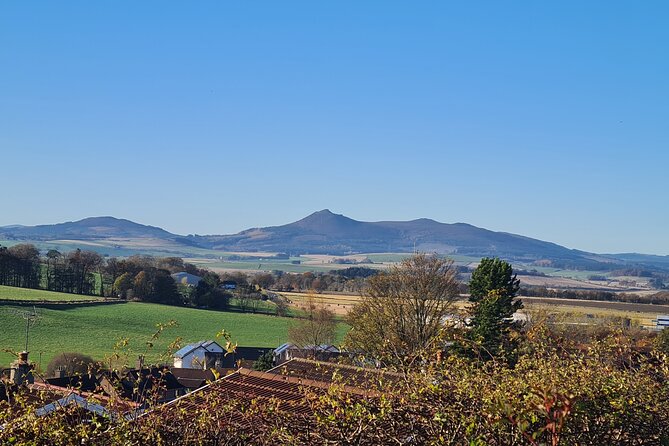
The Picts left clues everywhere. This seven-and-a-half-hour trip takes you beyond Aberdeen to hillforts, carved stones, and ancient circles that most visitors never see. I like the small maximum of seven people and the chance to hear local folklore from Jacqueline, a guide praised for shaping the day around personal interests. I also like the mix of open countryside, archaeology, and sweeping views rather than one crowded attraction.
The main consideration is the walking. Barra Hill and Dunnideer involve uphill sections, some of them steep, and the tour is not recommended for people with mobility issues. Lunch is not included, so you must buy food in Insch or Bellabeg, or bring a picnic.
In This Review
- Key points at a glance
- Why this Aberdeen day trip feels different
- Barra Hill and the first look at Pictish defenses
- Dunnideer Hillfort and a castle built into the past
- Rhynie, Pictish symbols, and the scale of Tap O’Noth
- Lunch near Bellabeg and the Doune of Invernochty
- Tomnaverie Stone Circle and northeastern Scotland’s distinctive monument
- Jacqueline’s personal approach to the day
- What $135.49 buys you
- Walking, weather, and practical preparation
- Who should book this experience
- Should you book Aberdeen’s Ancient Heritage and Folklore?
- FAQ
- Where does the tour start?
- What time does the tour begin?
- How long does the experience last?
- Where does the tour finish?
- How many people can join the tour?
- Is lunch included?
- What fitness level is needed?
- Is the tour suitable for people with mobility issues?
- Is WiFi available?
- What happens if bad weather cancels the tour?
Key points at a glance
- Pictish sites away from the crowds: See hillforts, carved stones, and ancient monuments in rural Aberdeenshire.
- A genuinely small group: The tour carries no more than seven people, making conversation and custom plans much easier.
- Jacqueline’s flexible guiding: She has adjusted days for individual interests, including extra stops such as a sea cliff, puffins, a whisky brewery, and a castle when suitable.
- Five varied stops: The day moves from Iron Age defenses to Pictish symbols, a motte and bailey castle site, and a 4,500-year-old burial cairn.
- Bring walking poles if you have them: Hill sections can be demanding, though some poles may be available to borrow.
- Good planning matters: The tour leaves Aberdeen at 9:00 am, lasts about 7 hours 30 minutes, and is often booked well ahead.
Why this Aberdeen day trip feels different
Aberdeen has plenty of familiar sights, but this excursion points you toward the older story beneath the modern city. The Picts left few written records, so their past is pieced together through stone carvings, forts, settlements, burial places, and later Scottish traditions.
That makes the day appealing if you enjoy history with unanswered questions. You are not simply walking into a preserved building and reading a plaque. At several stops, you look at earth banks, scattered stones, or a hilltop setting and consider what those remains may have meant.
The route also reaches parts of Aberdeenshire that are difficult to visit without a car. Public transport will not easily connect these rural sites in one day, especially when you factor in the short walks and time needed to understand each place. The included WiFi on board is a useful extra, but the real value is the transport, local interpretation, and compact route.
The group limit of seven is important. With a larger coach, these sites could feel like quick photo stops. In a small group, you have a better chance to ask about Pictish symbols, local stories, or the difference between a hillfort and a later castle.
More history walks:
- Aberdeenshire Private Half Day Castle & Historic Building Tour
★ 5.0 · 18 reviews - Aberdeen Historical Walking Tour
★ 5.0 · 13 reviews - Old Town Walking Tour History and Tales in Edinburgh
★ 5.0 · 2,168 reviews
Barra Hill and the first look at Pictish defenses
The day begins at the William Wallace Statue on Union Terrace in Aberdeen at 9:00 am. From there, the first historical stop is Barra Hill, also described as Barry Hill, one of the more accessible hillfort sites in the area.
Hillforts were built on high ground. Their banks and enclosures could help protect a settlement where people lived and worked. At Barra, only foundations remain, so this is not a conventional ruin with intact walls. You need to use the shape of the ground and the guide’s explanation to picture the community that once occupied the site.
That is also the charm. Archaeology here is about reading traces. A raised bank, a ditch, or the outline of an enclosure may look modest at first, but the position on the hill tells you why the site mattered.
Allow about an hour. Wear shoes with a firm grip and expect uneven ground. The hill section is one reason the tour asks for moderate physical fitness. If you have walking poles, bring them. The operator may have some available, but you should not rely on that.
Dunnideer Hillfort and a castle built into the past
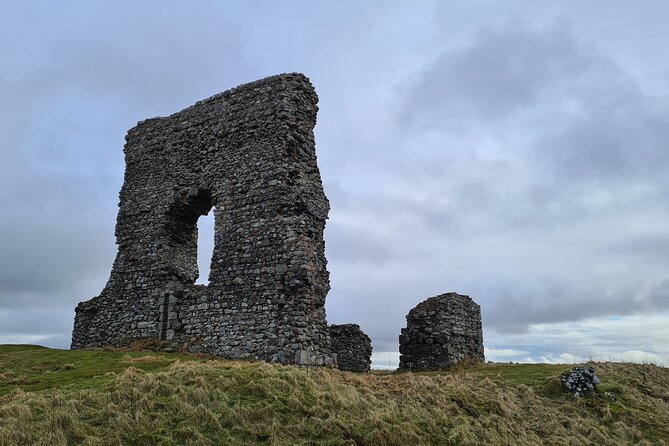
Dunnideer offers a strong contrast to Barra. You take a short walk up a low hill and see the remains of Dunnideer Castle, a tower house built around 1260. Part of the later castle used the remains of an older vitrified hillfort, so two periods of Scottish history occupy the same hill.
The hillfort has at least five concentric rings of defenses. From below and from the top, you can make out the banks and ditches more clearly than you might expect from a site with no standing fortifications.
Nearby are the remaining stones of Dunnideer Stone Circle. They add atmosphere, but they also remind you that this location was significant long before the medieval tower house appeared. The visit lasts about 30 minutes, making it a compact stop rather than a long walk.
I like this part of the route because it shows how places were reused. A medieval builder did not choose an empty hill at random. The older defenses already gave the site height, presence, and perhaps practical advantages.
The limitation is that the castle is in ruin, and the stone circle is incomplete. If you need intact buildings or extensive museum displays, this will feel spare. If you enjoy sites where the setting does much of the work, it is a rewarding stop.
Rhynie, Pictish symbols, and the scale of Tap O’Noth
Rhynie is one of the day’s key stops. The area was a Pictish stronghold in northeastern Scotland, and the nearby Tap O’Noth has Scotland’s largest hillfort. At its height, the hilltop settlement may have held more than 5,000 people, a remarkable figure for a post-Roman community.
The wording matters here: researchers believe this may have been the population, rather than there being a complete written record. That uncertainty is part of what makes the site interesting. You are considering a large settlement through archaeological evidence, not touring a fully reconstructed town.
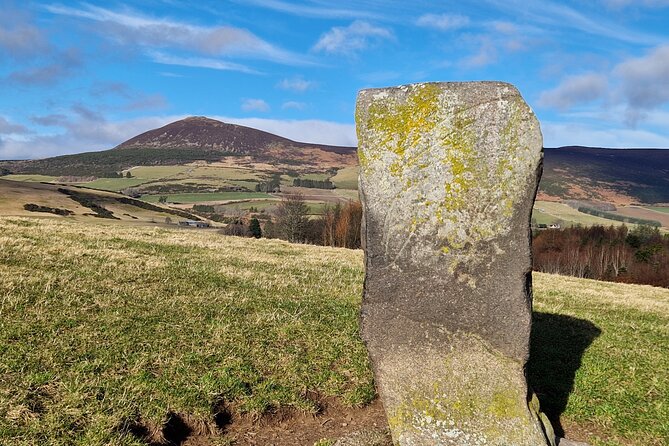
You also see a group of Pictish carved stones and learn how to think about their symbols and designs. The Picts left distinctive images, but their meanings are not always certain. A good guide can explain what is broadly accepted while making clear where interpretation begins.
The Crawstane, a lone standing stone, once sat at the center of a settlement linked to trade across the Mediterranean. That detail changes how you see the Picts. They were not isolated people living beyond the reach of the wider world. The evidence points to trade, status, and connections that stretched much farther than the local hills.
This is also where the story turns toward the rise of the King of the Scots and the cultural changes that contributed to the Picts’ eventual downfall. The day does not treat the Picts as a mysterious people who simply vanished. Instead, you get a more useful account of how political and cultural shifts changed Scotland.
Plan for about an hour. You will gain more from this stop if you are willing to ask questions. Jacqueline has been praised for explaining the stones and adapting the day to individual interests, so this is a good place to tell her what you want to understand better.
A few more trips and experiences worth a look
- Aberdeen City Centre Walking Tour (2pm)
★ 5.0 · 217 reviews - Dunnottar Castle and Royal Deeside Small-Group Tour from Aberdeen
★ 5.0 · 196 reviews - Loch Ness and the Highlands Small-Group Day Tour from Aberdeen
★ 5.0 · 164 reviews - North East Coastal Trail Small Group Day Tour from Aberdeen
★ 5.0 · 80 reviews
Lunch near Bellabeg and the Doune of Invernochty
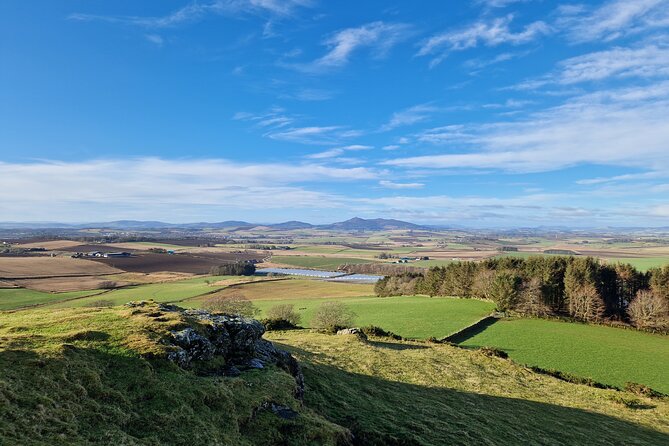
The lunch break comes at Bellabeg, near the Doune of Invernochty motte and bailey castle. The village sits in the Cairngorm National Park, and the break is intended to be relaxed, with the option of a picnic by the river or a walk through country lanes.
Lunch is not included. You can buy food in Insch or Bellabeg, or bring your own. A cooler is provided, which is helpful if you are carrying a picnic or buying food before the stop.
This arrangement gives you flexibility, but it requires planning. Do not assume you will receive a prepared meal during the tour. If you have dietary needs or want a particular lunch, bringing food is the safest option.
The break lasts about 45 minutes. It is less about a formal attraction and more about giving your legs and attention a rest before the final monuments. The nearby motte and bailey site adds another layer to the day, linking the earlier earthwork sites with medieval power and defense.
Tomnaverie Stone Circle and northeastern Scotland’s distinctive monument
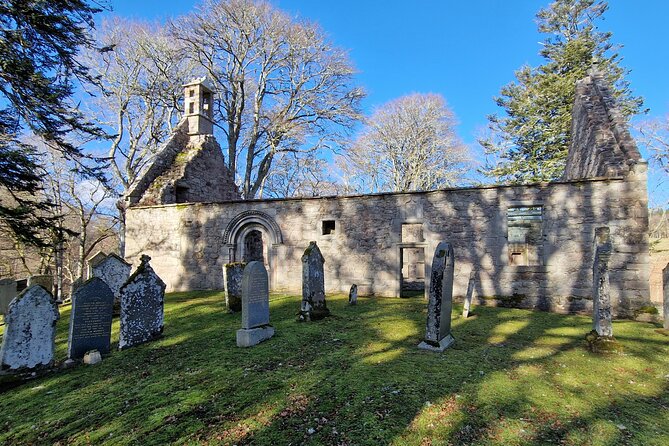
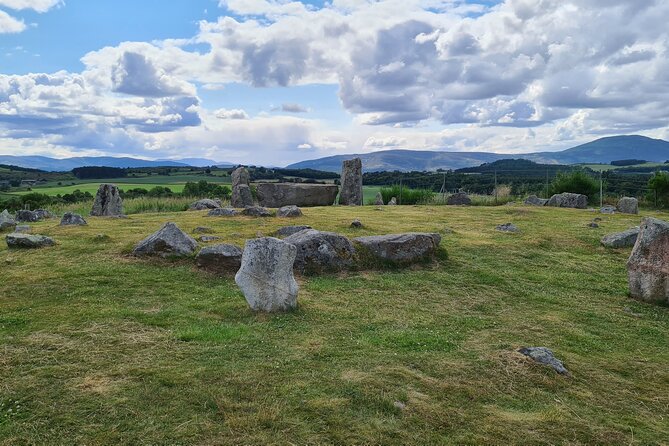
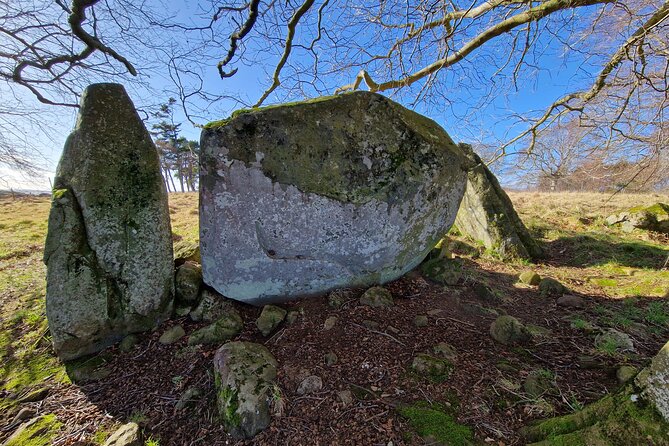
The final listed stop is Tomnaverie Stone Circle, a recumbent stone circle with broad views around it. This form is associated with northeastern Scotland and has a large stone lying on its side, flanked by two upright stones. Other standing stones complete the circle.
Close by is a burial cairn dating to about 4,500 years ago. The age alone is striking, but the bigger value comes from the questions the site raises. Nobody can give you a simple, certain explanation for why these circles were built. You will hear several theories and can judge the setting for yourself.
Tomnaverie is a good closing stop because it takes you farther back than the Pictish and medieval sites. The day has moved through several periods, from prehistoric burial practices to early communities, Pictish power, and later Scottish rule.
Allow about 30 minutes. The short visit means you should not expect a long archaeological walk or a full interpretation center. What you get is time to see the arrangement of the stones, take in the views, and place the monument within the wider story of northeastern Scotland.
Jacqueline’s personal approach to the day
The strongest praise for this experience centers on Jacqueline. She has been described as accommodating, engaging, and able to shape the route around the interests of the person or group in the vehicle.
One solo booking became a very personalized day because the group size allowed her to adjust the conversation and focus. Another outing included extra stops connected with a sea cliff, seabirds and puffins, a whisky brewery, and a castle. Those additions should not be treated as guaranteed parts of every departure, but they show the kind of flexibility that may be possible.
That matters because this is not a fixed attraction with the same experience for hundreds of people at once. Tell Jacqueline early if you care most about archaeology, folklore, photography, wildlife, or local places outside the usual sightseeing circuit.
The guide’s role is especially important at sites such as Dunnideer and Tomnaverie. Without context, a bank, stone, or partial ruin can be easy to overlook. With a clear explanation, you begin to see how people used the site and why its location mattered.
What $135.49 buys you
The price is $135.49 per person. For a 7-hour-30-minute outing with transportation from central Aberdeen, a maximum of seven people, WiFi on board, and several rural sites, I consider that a fair price for the right audience.
You are paying for access to places that are awkward to connect independently in one day. You are also paying for local guidance at sites where there may be little on-site information. The small group is a real part of the value, particularly if you want to ask questions or request a modest adjustment.
The price does not include lunch. Set aside extra money for food, or pack a picnic before departure. Since the tour is often booked about 64 days in advance, reserving early is sensible if your Aberdeen dates are fixed.
The value drops if you dislike outdoor ruins, uncertain archaeological evidence, or walking over open hills. This is not a polished castle tour with indoor rooms and guaranteed shelter. It is a countryside history day, and the weather will shape it.
Walking, weather, and practical preparation
You should have moderate physical fitness for the hill sections. The tour is not recommended for people with mobility issues, though the operator says adjustments can be made and participation in the walking is not required in every case. Contact the provider before booking if you have concerns.
Wear sturdy shoes and bring walking poles if you own them. The hills include steep sections, and even a short walk can feel harder in wet conditions.
Good weather is required. If poor weather forces cancellation, you will be offered another date or a full refund. You can also cancel for a full refund up to 24 hours before the 9:00 am start time. Changes or cancellations made inside that window are not accepted for a refund.
Service animals are allowed, and the starting point is near public transportation. The tour returns to the William Wallace Statue at the end of the day.
Who should book this experience
I would choose this tour if you want local archaeology without a large coach group, especially if you have already seen Aberdeen’s central sights and want to reach the surrounding countryside.
It suits people who enjoy standing stones, old earthworks, folklore, and historical questions that do not have tidy answers. It is also a good fit if you value conversation with a guide and the possibility of a more personal route.
Families with older children may enjoy the variety, but younger children could find the stops slow if they need interactive displays or constant activity. Photography fans should appreciate the hilltop settings and views, while whisky or wildlife enthusiasts may want to ask in advance about possible custom additions.
I would think twice if you need step-free access, indoor shelter, or a guaranteed lunch. The tour can make adjustments, but the core experience remains outdoors and depends on decent weather.
Should you book Aberdeen’s Ancient Heritage and Folklore?
Book it if you want to see the Pictish side of Aberdeenshire rather than simply hear about it in a museum. The combination of Barra Hill, Dunnideer, Rhynie, Bellabeg, and Tomnaverie gives you a clear sense of how many layers of history sit around Aberdeen.
The best reason to go is the small, flexible format and Jacqueline’s personal guiding style. The main cost is not just the ticket price. It is the need to accept hills, weather, packed lunch planning, and ruins that require imagination.
Bring good shoes, food, and curiosity. If those sound like fair trade-offs for quiet sites and local stories, this is one of the more distinctive day trips you can make from Aberdeen.
FAQ
Where does the tour start?
It starts at the William Wallace Statue on Union Terrace, Aberdeen, AB10 1NP.
What time does the tour begin?
The tour begins at 9:00 am.
How long does the experience last?
It lasts approximately 7 hours and 30 minutes.
Where does the tour finish?
The tour ends back at the William Wallace Statue meeting point in Aberdeen.
How many people can join the tour?
The maximum group size is seven people.
Is lunch included?
No. You can buy lunch in Insch or Bellabeg, or bring a picnic. A cooler is provided.
What fitness level is needed?
A moderate level of physical fitness is advised because the route includes hill sections and some steep parts.
Is the tour suitable for people with mobility issues?
It is not recommended for people with mobility issues. Some adjustments may be possible, and participants are not expected to take part in every walking section. Contact the provider before booking if needed.
Is WiFi available?
Yes. WiFi is included on board.
What happens if bad weather cancels the tour?
If poor weather causes cancellation, you will be offered a different date or a full refund.
Just added around Aberdeen
- Private Balmoral Glamis Dunnottar Castles Tour from Aberdeen★ 5.0 · 3 reviews
- Aberdeenshire and Royal Deeside Private Half-day Castle Tour★ 5.0 · 4 reviews
- Best Scottish Whisky Distilleries Private Tasting Trip plus optional Castle Tour★ 5.0 · 4 reviews
- Private Aberdeen City Walking Tour★ 5.0 · 6 reviews
- Aberdeen’s Union Street: A Self-Guided Audio Tour★ 4.5 · 9 reviews
- Gin Tasting Masterclass in Aberdeen★ 5.0 · 13 reviews
- Aberdeen Historical Walking Tour★ 5.0 · 13 reviews
- 2 hour Gin School Experience in Aberdeen★ 5.0 · 19 reviews
Historical Tours, compared.
Old Town Walking Tour History and Tales in Edinburgh
Read our review →
Multi-Sensory Small-Group Historic Vaults Tour in Edinburgh
Read our review →
Edinburgh Old Town: Historical Guided Walking Tour
Read our review →

Browse the lists this tour appears in