
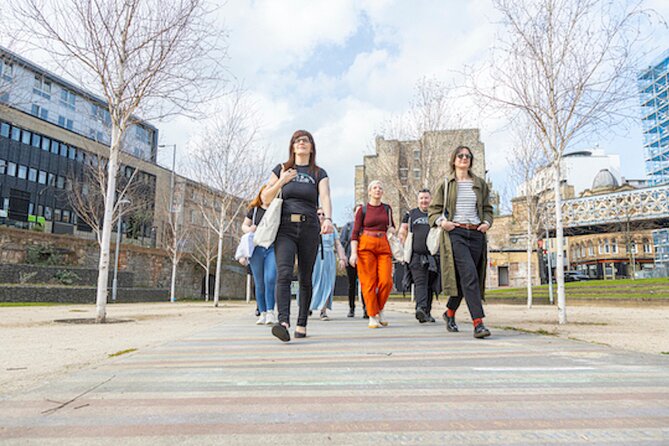
Reviewed · WALKING TOURS
Merchant City Music Walking Tour of Glasgow
Glasgow sings from side streets. This two-hour Merchant City Music Walking Tour follows the city’s live-music story from the Clutha Bar to Barrowland Ballroom, with local guides who know the musicians, venues, and odd tales behind the songs. I like the focus on places you could easily pass without noticing, and I like that guides may include music writers such as Fiona, whose arts background adds real depth. The main drawback is that access to Britannia Panopticon Music Hall is currently unavailable, so you hear its stories from outside rather than seeing the interior.
At $27.08 per person, the tour offers good value if music is high on your Glasgow list. You get about two hours, a small-group setting capped at 26 people, and a 20% food discount at Mono Cafe Bar. Plan for outdoor walking in all weather, arrive at least 10 minutes early, and wear shoes you can comfortably use on city streets.
In This Review
- Five Glasgow music stories worth knowing
- Why this tour gives Glasgow a different soundtrack
- Starting at the Clutha Bar on Bridgegate
- Britannia Panopticon and Glasgow’s early stage life
- City Halls, the Old Fruitmarket, and a punk-era turning point
- The Tron Theatre and an unusual piece of old Glasgow
- Barrowland Ballroom, where the city’s music identity comes into focus
- St Andrews in the Square and a church turned concert venue
- Finishing near The 13th Note and Mono Cafe Bar
- What the $27.08 price really buys you
- Practical details that shape the experience
- Who will enjoy this Glasgow walk most?
- Should you book the Merchant City Music Walking Tour?
- FAQ
- How long is the Merchant City Music Walking Tour?
- Where does the tour start?
- Where does the tour finish?
- Is Britannia Panopticon Music Hall open during the tour?
- Is food included?
- What happens if the weather is bad?
Five Glasgow music stories worth knowing
- The Clutha Bar murals show how one Clydeside pub became part of Glasgow’s live-music identity.
- Britannia Panopticon is Britain’s oldest surviving music hall, with links to Harry Lauder, Cary Grant, and Stan Laurel.
- The Barrowland Ballroom remains one of Scotland’s best-known gig venues, with stories tied to major acts and Glasgow music culture.
- The Old Fruitmarket and City Halls connect the city’s concert life to the moment punk rock was banned in Glasgow.
- Barrowland Park artwork turns a walk between venues into a visual roll call of performers.
- Mono Cafe Bar and The 13th Note provide the setting for the final discussion about Glasgow’s distinct music style.
Why this tour gives Glasgow a different soundtrack
Glasgow has plenty of standard sightseeing, but this walk takes a different route through the city. You are not simply checking off grand buildings. You are looking at pubs, halls, theatres, churches, murals, and street art through the music that happened there.
That focus matters because Glasgow’s music story is tied closely to ordinary places. A pub can matter as much as a formal concert hall. A former church can become a live venue. A lane or park can carry memories of bands that played nearby decades ago.
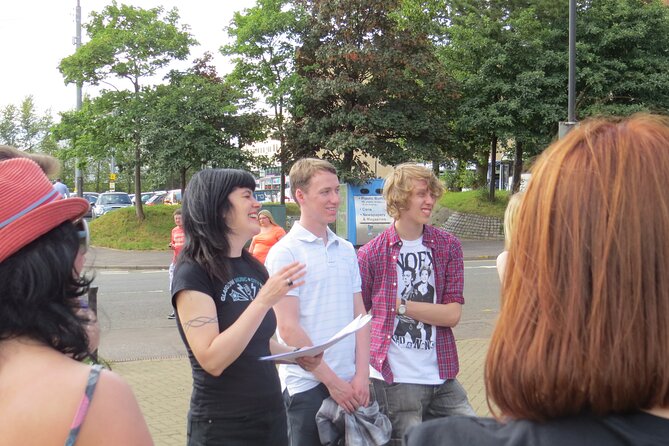
I particularly like the local-guide approach. Fiona is an arts journalist, and Phil, also known as P6, has been praised for bringing passion and insight to the walk. The guide’s personality matters here. This is a storytelling tour, not a museum audio guide, so a lively narrator can make the difference between a list of dates and a memorable city walk.
The group maximum of 26 keeps the experience fairly personal, though it is not a private tour. You should be able to hear the guide clearly in normal conditions, but larger groups can still feel less intimate than a small family or friend group.
The walk lasts about two hours. A comfort break is included along the way, and the route is described as easy walking. Still, you will be outdoors throughout much of the experience, so Glasgow’s weather deserves respect. Bring a waterproof layer and dress for standing around while stories unfold.
More Walking Tours in Glasgow
- Glasgow City Centre Walking Tour with Local Guide
★ 5.0 · 1,326 reviews - Glasgow Street Art Daily Walking Tour: 2pm
★ 5.0 · 648 reviews - Gander Walking Tours in Glasgow
★ 5.0 · 506 reviews
Starting at the Clutha Bar on Bridgegate
The tour starts at 11:00 am outside the Clutha and Victoria Bar at 159 Bridgegate. Arrive by 10:50 am so you are not trying to locate the group at the last moment.
The Clutha Bar is a fitting starting point. This Clydeside pub is one of Glasgow’s best-loved live-music venues, and its exterior murals celebrate the range of performers connected with the city. The murals give you something concrete to study while the guide sets the scene.
This opening stop works well because it immediately shows the tour’s method. Glasgow’s music story is not confined to famous stages. It is painted onto walls, remembered in pubs, and carried by local audiences.
You spend about 10 minutes here. Admission is free, as it is at every listed stop, so your ticket pays for the guide’s time and interpretation rather than entry fees. That is useful to understand when judging value. You are buying access to context, stories, and local perspective.
Britannia Panopticon and Glasgow’s early stage life
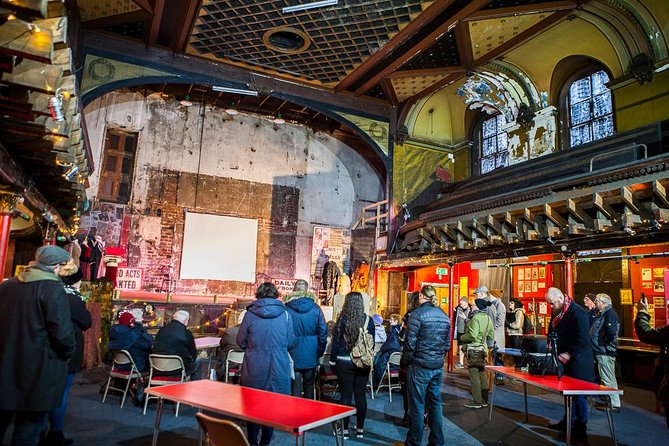
The next major stop is Britannia Panopticon Music Hall, described as Britain’s oldest surviving music hall. Its history reaches back to performers such as Harry Lauder, while later stage names connected with the building include Cary Grant and Stan Laurel.
The Panopticon is one of the tour’s most unusual subjects. It helps place Glasgow’s music culture in a longer story of popular entertainment. Before modern concert halls and large touring productions, music halls gave audiences comedy, songs, variety acts, and celebrity performers under one roof.
You spend around 20 minutes on this part of the walk. The catch is important: access to the interior is currently unavailable because of Covid-related restrictions noted in the tour information. You can still hear the stories and understand the building’s place in Glasgow, but do not book expecting an indoor visit.
That limitation may matter most to travelers who are especially interested in architecture or historic interiors. For music fans, the guide’s explanation can still make the stop worthwhile, but the experience is less complete without entry.
City Halls, the Old Fruitmarket, and a punk-era turning point
From there, the route reaches City Halls and the Old Fruitmarket. These venues have hosted memorable concerts, including a Stranglers performance linked with the banning of punk rock in Glasgow.
That detail gives the tour some of its sharpest social context. Music is not only entertainment. It can unsettle authorities, challenge public taste, and expose tensions between young audiences and official culture.
The stop lasts about 10 minutes. You will not spend the entire time inside a concert venue, and no admission is included or needed. Instead, the guide connects the buildings to concerts and events that helped shape how Glasgow saw itself.
I like this part because it moves beyond famous names. You learn how a city’s music culture develops through clashes, new sounds, and local reactions. The story also helps explain why a city can become known for live music even when its most important moments happen in modest venues.
Something different, still within reach of Glasgow:
- Guided Celtic Park Stadium Tour
★ 5.0 · 3,136 reviews - City Sightseeing Glasgow Hop-On Hop-Off Bus Tour
★ 4.5 · 1,873 reviews - Oban, Glencoe, Highlands Lochs & Castles Small Group Day Tour from Glasgow
★ 5.0 · 1,432 reviews - Loch Ness & the Highlands Day Tour from Glasgow Including Cruise
★ 5.0 · 1,211 reviews
The Tron Theatre and an unusual piece of old Glasgow
The Tron Theatre is a brief stop of about five minutes. Today it is a theatre and concert venue, but its past includes a devastating encounter with the notorious Hellfire Club.
Because the stop is short, expect a compact story rather than a full theatre visit. This is a good example of the tour’s rhythm. Some locations receive a longer explanation because they are central to Glasgow’s music story, while others add a strange historical detail and help connect the route.
The Tron also keeps the walk from becoming narrowly focused on rock bands. Glasgow’s performance culture includes theatre, music hall, concerts, and older forms of public entertainment. That wider frame makes the later discussion of punk, indie music, and live venues easier to understand.
Barrowland Ballroom, where the city’s music identity comes into focus
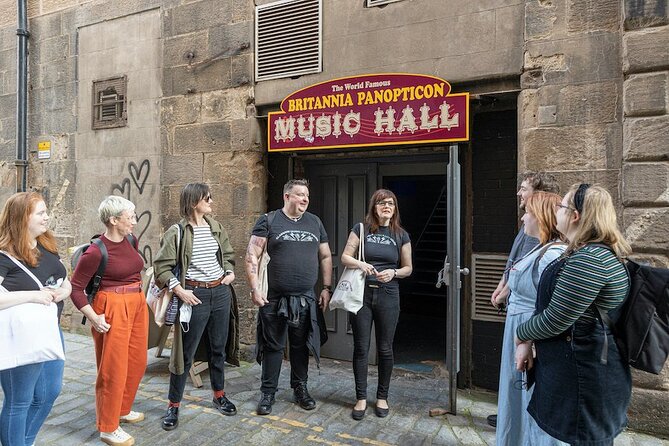
The Barrowland Ballroom is the emotional center of the walk for many music fans. The venue is much loved by Glasgow gig-goers, and its story is as colorful as the performers who have appeared there.
You spend about 10 minutes at the ballroom, then another 15 minutes in Barrowland Park. That extra time matters. The tour does not treat the ballroom as a quick photo stop. It uses the surrounding area to explain why this venue carries such weight in Glasgow.
The nearby Barrowland Pathway artwork highlights acts associated with the venue. The guide can use those names as a springboard for stories about The Smiths, Simple Minds, David Bowie, Bob Dylan, and other performers.
This is likely to be the strongest section for anyone who already has favorite bands. Even if you do not know every name, the artwork gives you visual markers and the guide supplies the links between artists, audiences, and place.
The drawback is that the tour does not include a concert or an interior ballroom visit. You are seeing the building and hearing its story from the street. That is still valuable, but you should think of this as a music-history walk, not a backstage experience.
St Andrews in the Square and a church turned concert venue

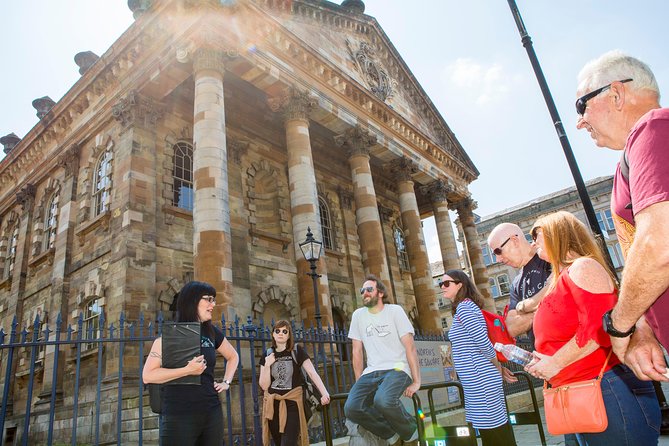
The route then reaches St Andrews in the Square, a beautiful 18th-century church that now operates as a live music venue. The stop lasts about five minutes.
The building shows how Glasgow reuses older spaces. A church can take on a new life as a place for concerts while keeping its architectural identity. The guide also connects St Andrews with major figures in Scotland’s cultural past.
This short stop adds variety after the Barrowland section. You move from a famous ballroom and its painted pathway to a more formal building with a very different setting. The contrast helps show that Glasgow’s music culture does not belong to one style, one neighborhood, or one kind of building.
Since the tour is outdoors and admission is not included, do not assume you will receive a full interior tour here. The value comes from seeing the setting and learning how it fits the city’s cultural story.
Finishing near The 13th Note and Mono Cafe Bar
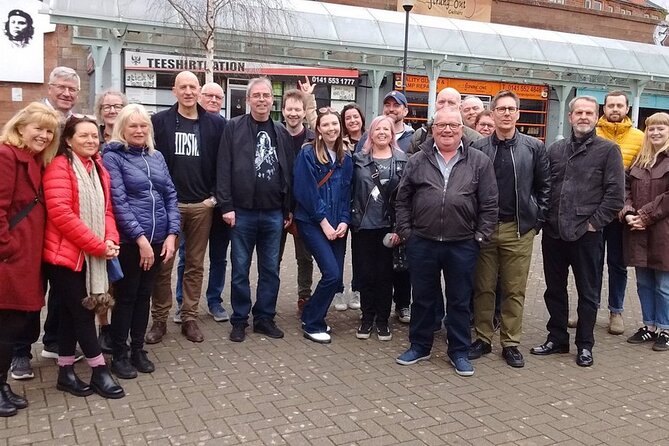
The walk ends around King Street, near The 13th Note. This area has links to Postcard Records, The 13th Note, and Mono Bar, giving the guide a natural place to discuss Glasgow’s past and present music culture.
The final stop is less about one building and more about the question of why Glasgow developed such a distinctive music scene. That closing discussion gives the walk a useful shape. You begin with a pub, pass through music halls and concert venues, and finish with record-label and independent-venue connections.
The 13th Note is especially relevant for people interested in alternative and independent music. Postcard Records also points toward the role of local labels in giving artists a platform and helping a city develop its own sound.
Your ticket includes a voucher for 20% off food at Mono Cafe Bar. Food and drinks are not otherwise included, so this discount is a practical bonus rather than a meal deal. If you finish hungry, it gives you a reason to stay in the area and extend the music-themed outing.
What the $27.08 price really buys you
At $27.08, this is not the cheapest way to spend two hours in Glasgow, especially since the stops are free and the Panopticon interior is not currently accessible. But the comparison is not really between this tour and walking the same streets alone.
The price pays for a guide who knows the connections between venues, performers, records, and local culture. Without that commentary, the Clutha murals are simply murals, Barrowland Park is simply a park, and the Old Fruitmarket is another historic building.
I consider the tour good value if you enjoy live music, music history, or city stories that go beyond major monuments. It is less compelling if you want extensive indoor access, a concert, or a general introduction to Glasgow’s architecture.
The 20% Mono Cafe Bar discount improves the value a little, particularly if you plan to eat near the endpoint. The group limit of 26 also keeps the cost below what you might pay for a private guide while offering a more personal feel than a large coach tour.
Practical details that shape the experience
The tour is offered in English and uses a mobile ticket. It begins at 11:00 am from the Clutha and Victoria Bar and finishes on King Street. The route is near public transportation, which makes both ends reasonably practical for a day of sightseeing.
Most people can take part, and service animals are allowed. If you have mobility concerns, contact the operator before booking to discuss the route. The tour runs in all weather, so rain protection is not optional in Glasgow.
You receive confirmation at booking. Free cancellation is available up to 24 hours before the scheduled start time. Cancellations or changes made less than 24 hours before the start are not accepted for a refund.
Because the experience is often booked about 25 days ahead, booking early makes sense if your Glasgow dates are fixed. The 26-person cap is not tiny, and popular departure times can fill.
Who will enjoy this Glasgow walk most?
I would choose this tour for:
- Music fans who want venues and local stories rather than a standard city tour.
- Visitors who enjoy live performance history, from music hall acts to punk and independent music.
- First-time Glasgow visitors who want an unusual route through the Merchant City.
- Repeat visitors who have already seen the main landmarks and want a fresh subject.
- People who like guides with strong personal enthusiasm and local knowledge.
I would think twice if you need a fully indoor activity, want to enter every venue, or prefer a quiet architectural walk with little commentary about performers.
The experience also suits mixed groups when at least one person is music-mad. The route includes enough general Glasgow history to keep non-specialists involved, but music remains the main subject from start to finish.
Should you book the Merchant City Music Walking Tour?
Book it if you want to understand why Glasgow is so closely tied to live music. The strongest features are the local guides, the Barrowland section, the Clutha murals, and the stories behind places that are easy to miss on your own.
I would be comfortable recommending it at $27.08, with one clear condition: treat it as a guided outdoor history walk, not a venue-access tour. The lack of entry to Britannia Panopticon reduces the experience slightly, but the route still offers plenty of character, music history, and useful city context.
If possible, ask for a guide such as Fiona or Phil when scheduling is within the operator’s control. Fiona brings an arts-journalist perspective, while Phil, also called P6, is known for an energetic approach. Either style suits a tour built on stories.
FAQ
How long is the Merchant City Music Walking Tour?
The tour lasts approximately two hours, including the walking route and a comfort break.
Where does the tour start?
It starts at 11:00 am at the Clutha and Victoria Bar, 159 Bridgegate, Glasgow G1 5HZ.
Where does the tour finish?
The tour finishes on King Street, near The 13th Note and Mono Bar.
Is Britannia Panopticon Music Hall open during the tour?
The tour information states that access to Britannia Panopticon is currently unavailable due to Covid. The guide can still share its stories from outside.
Is food included?
Food and drinks are not included. You do receive a voucher for 20% off food at Mono Cafe Bar.
What happens if the weather is bad?
The tour operates in all weather conditions, so dress appropriately for outdoor walking. Contact the operator before booking if you have mobility concerns.
Just added around Glasgow
- Glasgow: Glencoe & Oban Privately Guided Day Tour in Luxury MPV★ 5.0 · 3 reviews
- Jacobites and Scottish Highlands Day Tour from Glasgow★ 4.5 · 3 reviews
- Highland Lochs & Castles Tour to Oban & Glencoe★ 5.0 · 3 reviews
- Pints & Past: Glasgow Pub Tour Private Tour★ 5.0 · 3 reviews
- 3 Day Isle of Skye Eilean Donan Castle and Loch Ness Tour★ 5.0 · 3 reviews
- The Scottish Highlands Photography Tour & Workshop★ 5.0 · 3 reviews
- Scottish Highland Day Tour from Glasgow★ 5.0 · 3 reviews
- Whisky Adventure – Private Day Tour from Glasgow★ 5.0 · 3 reviews
Walking Tours, compared.
Underground Vaults Walking Tour in Edinburgh Old Town
Read our review →
Edinburgh Castle: Guided Walking Tour with Entry Ticket
Read our review →
Edinburgh Castle Guided Walking Tour in English
Read our review →
Edinburgh Darkside Walking Tour: Mysteries, Murder and Legends
Read our review →
Old Town Walking Tour History and Tales in Edinburgh
Read our review →
Haunted Vaults and Graveyard Walking Tour in Edinburgh
Read our review →Browse the lists this tour appears in